
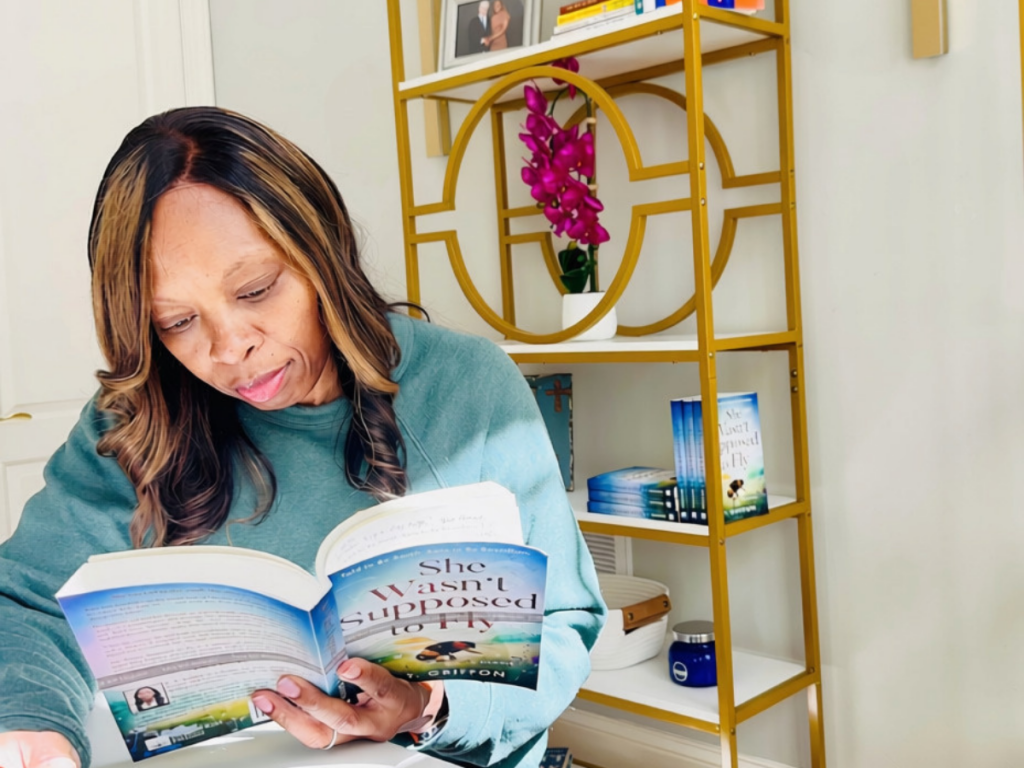
She Wasn’t Supposed to Fly didn’t begin as a book. It began as a journal.
I had abruptly lost my career, and writing became a way to process what I was feeling. On paper, I knew I had options. I had built a successful career. I had an education, experience, relationships, and resources. I knew I would eventually figure out what came next. And yet, the loss affected me with an intensity I couldn’t explain. Nothing about my circumstances seemed to account for the depth of emotions I was feeling.
Why did I suddenly feel as though I no longer knew who I was? Why did losing a job feel like losing something much bigger? And somewhere beneath those questions was a question I was afraid to ask: Did this mean all the people who had told me I didn’t belong were right?
The more I wrote, the deeper inside myself the questions took me, and what began as an attempt to understand one painful moment became an exploration of my life. How had I gotten here? Why had achievement come to mean so much? What had I been running toward all those years, and what had I been running from?
After some time, I began to understand that what I was grieving wasn’t the loss of my job, or even the perceived loss of the identity that defined me. I was grieving the loss of my agency. I had spent a lifetime proving to the world, and perhaps to myself, that despite the life I was born into, I could defy every expectation and fly.
And I did fly.
Until I was suddenly grounded in a way that made me ask, was I wrong?
And that was when the journal began to become something else. As personal as the circumstances were, the questions weren’t uniquely mine. Most of us will eventually encounter something that disrupts the story we’ve been telling ourselves about who we are. A career ends. A relationship changes. A family role shifts. A dream no longer fits. The details differ, but the reckoning can be remarkably similar—Who am I now and how do I find my way forward from here?
That was the moment I began to wonder whether what I was writing might have a life beyond my journal. The thought terrified me. Publishing a memoir meant making private things public. It meant allowing strangers into parts of my life I had neatly tucked away in a secret box, never to be revealed. There were experiences I had never imagined putting into a book for anyone to read. Keeping the manuscript to myself would have been easier. It would have been safer.
But over and over I kept returning to the same thought. If someone could read my story and say, I can do this. If she can survive that, I can survive this. I feel understood, then perhaps the vulnerability is worth it.
So, I made a decision.
If She Wasn’t Supposed to Fly does that for even one person, it will have earned its place in the world.